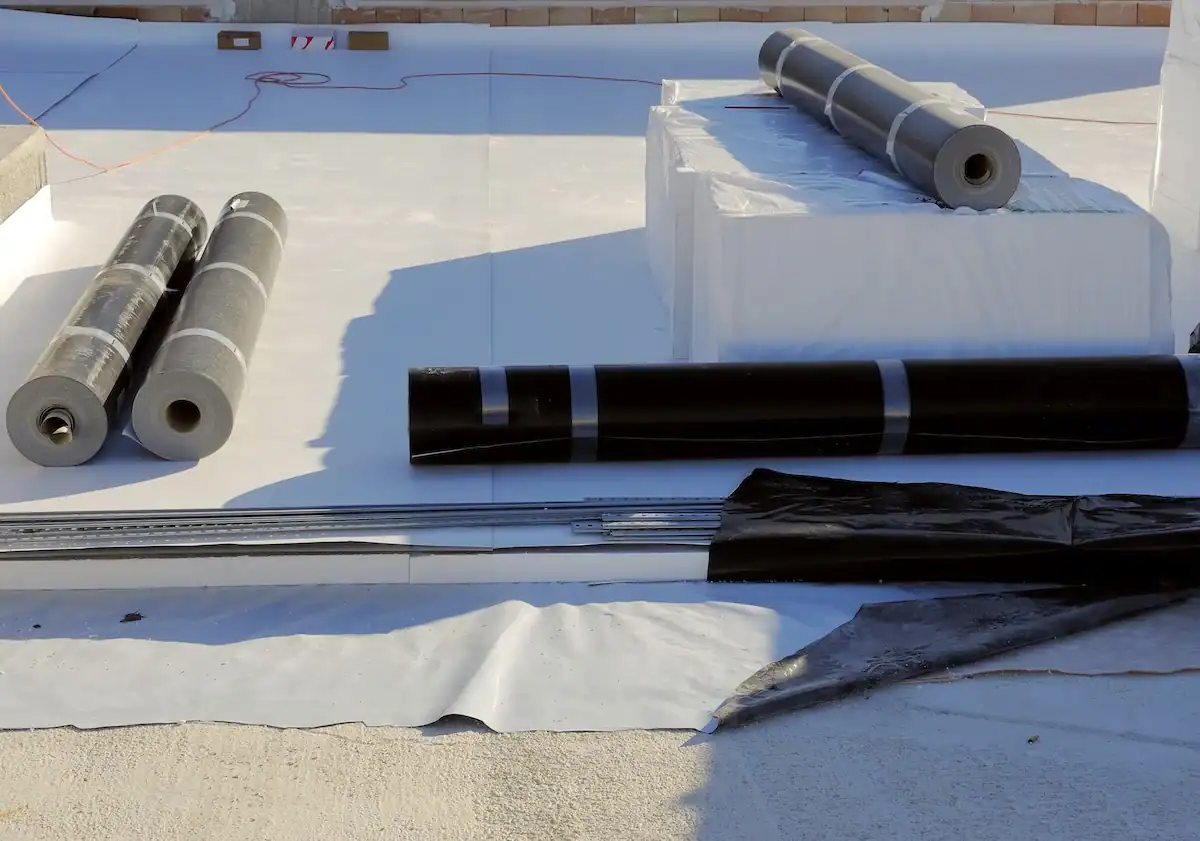
Single-ply roofing membranes dominate the commercial flat roof market for good reason. They are lightweight, durable, relatively fast to install, and available in formulations that can handle almost any climate or building type.
But single-ply is not a single choice. TPO, PVC, and EPDM are three distinct systems, each with different chemistry, performance characteristics, price points, and ideal applications. Picking the wrong one for your building can mean premature failure, higher maintenance costs, or voided warranties.
Here is how they actually compare.
What All Three Have in Common
Before getting into the differences, it helps to understand what makes single-ply membranes the standard for commercial flat roofing in the first place.
All three systems, TPO, PVC, and EPDM, are flexible sheet membranes installed over insulation on flat or low-slope roofs. They are lighter than built-up roofing systems, faster to install, and available in large rolls that reduce seam count. They can be mechanically fastened, fully adhered, or ballasted depending on the application.
The differences come down to material composition and how each one responds to your specific conditions.
TPO (Thermoplastic Polyolefin)
What It Is
TPO is a single-ply white membrane made from a blend of polypropylene and ethylene-propylene rubber. It became one of the most widely installed commercial roofing membranes in the U.S. over the past two decades, largely because of its combination of performance and price.
Strengths
- High solar reflectivity due to its white surface, making it an effective cool roof option and a strong choice for California’s sun-intensive climate
- Strong resistance to UV radiation, ozone, and chemical exposure
- Seams are heat-welded, which creates a bond that can be stronger than the membrane itself when done correctly
- Generally lower cost than PVC on comparable projects
- Lightweight and flexible, compatible with a range of installation methods
Limitations
- TPO quality varies significantly by manufacturer. Lower-tier products have shown inconsistent long-term performance, making brand selection critical
- Seam integrity is heavily dependent on installation quality. Poorly welded seams are the leading cause of TPO failures
- Not as chemically resistant as PVC, which matters for buildings with grease vents, kitchen exhausts, or chemical exposure
Best Fit
TPO is a strong choice for most commercial flat roofs where the primary goals are energy efficiency and cost management. Warehouses, office buildings, retail centers, and industrial facilities in hot, sunny climates get strong performance from a properly installed TPO system.
PVC (Polyvinyl Chloride)
What It Is
PVC roofing is a single-ply thermoplastic membrane that has been used on commercial roofs since the 1960s. It is formulated with plasticizers that give it flexibility and a range of chemical-resistant properties that set it apart from other single-ply options.
Strengths
- Exceptional chemical resistance. PVC is the clear choice for restaurants, food processing facilities, manufacturing plants, and any building where rooftop drainage may carry grease, oils, or harsh chemicals
- High reflectivity and energy performance comparable to TPO
- Heat-welded seams that create durable, watertight bonds
- Strong fire resistance ratings
- Long track record of performance across decades of installed systems
Limitations
- Higher upfront cost than TPO on most projects
- Plasticizers in PVC can migrate out of the membrane over time, particularly in extreme heat, leading to brittleness in older systems
- Less environmentally favorable than TPO or EPDM from a manufacturing standpoint, which matters for LEED-focused projects
Best Fit
PVC is the right choice whenever chemical exposure is a factor. Restaurants, commercial kitchens with rooftop vents, and industrial facilities with process-related rooftop drainage should default to PVC over TPO. It is also a strong option for projects where long-term durability data is a priority given its decades-long track record.
EPDM (Ethylene Propylene Diene Monomer)
What It Is
EPDM is a synthetic rubber membrane that has been used on commercial roofs since the 1960s. Unlike TPO and PVC, which are thermoplastic and heat-welded, EPDM is a thermoset membrane typically seamed with adhesive or tape.
Strengths
- Excellent flexibility across a wide temperature range, making it well-suited for regions with significant temperature swings
- Strong long-term durability record with many systems lasting 30 or more years with proper maintenance
- Handles thermal expansion and contraction well due to its rubber-based flexibility
- Generally lower material cost than PVC
- Available in large sheet sizes that reduce overall seam count
Limitations
- Standard EPDM is black, which absorbs rather than reflects heat. This makes it a poor choice for energy efficiency in warm climates unless a white-coated version is specified
- Adhesive-based seams are not as inherently strong as heat-welded seams and require careful application to maintain long-term integrity
- Not resistant to oils and grease, which limits its application on certain building types
- Can be susceptible to puncture from rooftop foot traffic if not properly protected
Best Fit
EPDM performs best in cooler climates with significant temperature variation where its rubber flexibility prevents the cracking and seam stress that can affect stiffer membranes. For California commercial properties, white-coated EPDM can address the heat absorption limitation, but TPO or PVC are generally the stronger starting point in most of the state.
Side-by-Side Comparison
Cost: TPO is typically lowest, EPDM is comparable, PVC is highest
Reflectivity: TPO and PVC are high (white membrane), standard EPDM is low (black)
Chemical resistance: PVC is highest, TPO is moderate, EPDM is lowest
Seam type: TPO and PVC use heat-welded seams, EPDM uses adhesive or tape
Flexibility in cold: EPDM is highest, TPO is good, PVC can stiffen
Track record: PVC and EPDM have the longest history, TPO is newer
LEED compatibility: TPO and EPDM are generally preferred over PVC
How to Make the Right Choice for Your Building
The right membrane depends on more than just price. Before selecting a system, consider:
- What is on your roof? Grease vents and kitchen exhaust points to PVC. Standard HVAC and minimal chemical exposure opens the door to TPO.
- What is your climate? Hot and sunny California properties benefit from reflective TPO or PVC. Cooler northern areas with sharp temperature swings may do well with EPDM.
- What are your energy efficiency goals? TPO and PVC both deliver strong cool roof performance. Standard black EPDM does not.
- What does your warranty require? Some manufacturer warranties specify approved membrane types. Confirm before selecting.
- What is your budget over time, not just upfront? PVC costs more initially but may outperform TPO on longevity in certain applications.
GoGreen Roofing Corporation Can Help You Choose
At GoGreen Roofing Corporation, we install and maintain all three single-ply membrane systems across commercial properties throughout the Western U.S. Our team assesses your building’s specific conditions, usage, and goals to recommend the membrane that will perform best over the long term, not just the one that looks best on paper.


