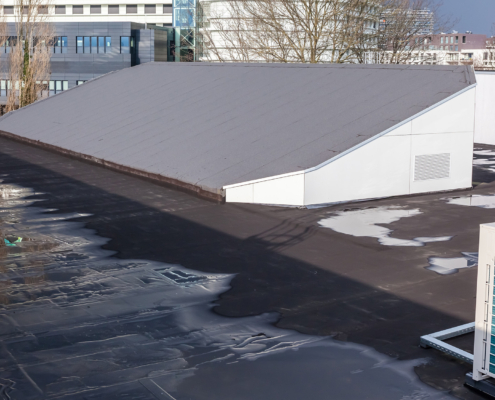
Roof flashing does not require constant attention, but it does require consistent attention. The best approach is building it into your regular maintenance routine.
Schedule Biannual Inspections
Professional inspections every spring and fall give you the opportunity to catch flashing issues before they become leaks. A trained roofer will check every transition point, assess sealant condition, and identify any movement or separation before water intrudes.
Inspect After Severe Weather
High winds, hail, and heavy rain all stress roof flashing. After any significant weather event, a post-storm inspection focused on flashing and penetrations can catch damage while it is still minor and repairable.
Address Small Repairs Immediately
A cracked pipe boot or a lifted section of base flashing is a small repair. Left alone through one rainy season, it becomes a structural problem. Prompt action on minor flashing repairs is one of the highest-return maintenance decisions a property manager can make.
Work With a Contractor Who Knows the System
When your rooftop equipment is serviced or new penetrations are added, the contractor doing that work needs to understand how to protect the flashing around their work area. A qualified roofing partner can coordinate with other trades to make sure new penetrations are properly sealed.