• Commercial Roofing
    • Roof Repair
    • Roof Replacement
    • New Construction
    • Preventative Maintenance
    • Reroofing
  • Products
    • Cool Roofing Systems That Reduce Energy Costs for Commercial Buildings
  • Materials
    • Roof Coating
    • Metal
    • TPO
    • PVC
    • Shingles
    • Tile
  • Industries
    • Commercial
    • Government
    • HOA Roofing
    • Industrial
    • Retail
    • Schools
  • About
    • Awards
    • Areas We Serve
      • Arizona
      • California
      • Colorado
      • Idaho
      • Montana
      • Nevada
      • Oregon
      • Utah
      • Washington
    • Projects / Portfolio
    • Testimonials
  • Resources
    • Blog
    • FAQ
  • Contact
  • Menu Menu

How Rooftop HVAC Units Damage Your Roof Over Time

How Rooftop HVAC Units Damage Your Roof Over Time

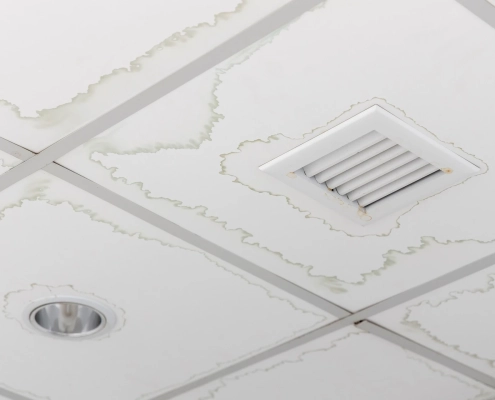
Rooftop HVAC roof damage is one of the most common, and most overlooked, problems on commercial buildings, and it usually starts long before anyone notices a leak. Your rooftop HVAC system keeps the building comfortable. It can also be quietly destroying your roof.

This is not a problem most property managers think about until a leak appears near an HVAC curb or a repair technician notes flashing damage during a service visit. But rooftop HVAC units are one of the most consistent sources of commercial roof damage, and the mechanism is not always obvious from the ground.

Understanding how your HVAC equipment affects the roof around it, and what to do about it, is part of effective commercial property management.
What Causes Rooftop HVAC Roof Damage

A rooftop HVAC unit introduces several types of stress that a roof without equipment does not experience. Most roofs are designed to handle their own weight and some foot traffic. Adding large mechanical units changes the equation in multiple ways.

Static Load

Commercial HVAC units are heavy. A single rooftop unit can weigh anywhere from 400 to several thousand pounds depending on the system. When multiple units are present, the cumulative load on the roof deck can be significant.

If the structural supports were not designed for the weight of added equipment, the deck can deflect or sag over time. Sagging creates low points where water pools, which accelerates membrane wear and eventually causes leaks. Any time new HVAC equipment is added to a roof, a structural review should be part of the process.

Vibration

Operating HVAC units vibrate constantly. That vibration transmits through the curb mount into the roof deck and surrounding membrane. Over time, vibration loosens fasteners, fatigues sealants around the curb flashing, and works open seams in the membrane nearby.

This is a gradual process that does not produce a visible problem immediately. By the time a leak appears at an HVAC curb, the vibration-related degradation may have been developing for years.

Thermal Cycling

HVAC units cycle on and off throughout the day, generating localized heat near the exhaust. The membrane around the curb is repeatedly exposed to elevated temperatures and then cools back down. This thermal cycling causes the membrane to expand and contract more aggressively in the zone immediately surrounding the equipment than it does elsewhere on the roof.

Over time, this concentrated thermal movement can cause membrane blistering, cracking, and separation from the curb flashing.

Worth remembering: most rooftop leaks near HVAC equipment do not start as one dramatic failure. They start as ordinary wear, at a seam, a fastener, a flashing edge, that goes unnoticed for years before it finally becomes a leak.

Commercial Roofing in California

Condensate Drainage

Air conditioning systems produce condensate water that needs to be drained. If condensate lines are not properly directed into roof drains or off the building entirely, that water sits on the membrane surface near the equipment. Standing water at any location on a flat roof is a problem. Standing water created daily by a drainage line that was never properly routed is a reliable path to premature membrane failure.

Condensate that drains onto the roof surface can also carry oils, refrigerants, or chemical residues that degrade certain membrane types over time.

Maintenance Traffic

HVAC units require regular servicing. Every service visit is a foot traffic event on your roof. HVAC technicians are often not trained on roof protection. They may step on membrane areas they should avoid, drag equipment across sensitive flashing zones, and set tools down on surfaces that are not designed for point loading.

Over years of routine HVAC maintenance, this unprotected foot traffic creates punctures, membrane compression, and flashing damage that accumulates across every service zone on the roof. Federal walking-working surfaces guidance underscores just how much foot traffic on a rooftop needs to be planned for, not treated as an afterthought.

The Most Common HVAC-Related Roof Damage

Curb Flashing Failure

The flashing that seals the joint between an HVAC curb and the roof membrane is one of the highest-risk areas on any commercial roof. It handles vibration, thermal movement, foot traffic, and condensate exposure all in the same location.

When curb flashing separates or degrades, water enters directly around the unit. Because the equipment is the source of the leak, the water path can travel to interior spaces that are some distance from the unit itself, making the source difficult to identify without a professional inspection.

Membrane Punctures Near Units

Tool drops, sharp equipment edges, and improper foot placement during service visits are the most common sources of puncture damage near HVAC units. These punctures are small but they are direct penetrations of the waterproofing layer and will leak under any significant rain event.

Drain Clogging

Debris from HVAC exhaust, including dust, lint, and organic material, accumulates on roof surfaces near units and can work its way into nearby drains. Regular drain clearing is part of any maintenance program, but equipment-related debris can accelerate the clogging cycle.

Structural Sagging

In older buildings or roofs that were not designed for the current equipment load, continuous pressure from heavy units causes the deck to deflect over time. Even small amounts of sagging create water collection zones that erode the membrane from below while ponding accelerates wear from above.

How to Protect Your Roof From HVAC Damage

Use Walk Pads

Walk pads are protective rubber or composite panels that create a safe walkway for maintenance technicians. They distribute foot traffic load and protect the membrane from direct contact with boots and equipment. They should be installed wherever regular service access is needed, from the roof access point to each unit.

Inspect Flashing After Every HVAC Service

Ask your HVAC contractor to report any flashing or membrane damage they observe during service visits. Better yet, schedule a quick roofing inspection after any service event that involved significant time near a curb. Catching flashing damage immediately after a service visit is far less costly than discovering it after the next rain.

Route Condensate Lines Properly

Confirm that all condensate drainage lines terminate at a roof drain or exit the building in a way that does not deposit water on the membrane surface. If any lines are currently draining onto the roof, have them rerouted by a qualified contractor.

Include HVAC Zones in Your Regular Inspections

When GoGreen Roofing Corporation conducts a commercial roof inspection, every HVAC curb and the surrounding membrane gets specific attention. The areas around rooftop equipment are high-risk zones that deserve more scrutiny than open field membrane areas. Make sure your inspection program reflects that.

Review Equipment Weight Before Adding New Units

Before any new HVAC equipment is installed, confirm that the roof deck can support the additional load. A structural assessment by a qualified engineer, combined with a roofing inspection to establish baseline condition before the equipment arrives, protects you from both structural risk and warranty complications.

GoGreen Roofing Corporation Protects the Zones That Matter Most

Rooftop equipment zones are among the highest-maintenance areas on any commercial roof. At GoGreen Roofing Corporation, our inspection and maintenance programs give HVAC curbs and penetration zones the focused attention they require, catching the early signs of vibration damage, condensate issues, and flashing wear before they develop into leaks.

Schedule a commercial roof inspection that covers your HVAC zones.

Share This Post

  • Share on Facebook
  • Share on X
  • Share on WhatsApp
  • Share on Pinterest
  • Share on LinkedIn
  • Share on Tumblr
  • Share on Vk
  • Share on Reddit
  • Share by Mail

More Like This

Water stains spreading across commercial ceiling tiles in an office building from an active roof leak above

The Real Cost of a Commercial Roof Leak (Beyond the Repair Bill)

https://www.gogreenroofco.com/wp-content/uploads/2026/08/Water-stains-spreading-across-commercial-ceiling-tiles-in-an-office-building-from-an-active-roof-leak-above.webp 1280 1920 Elemental https://www.gogreenroofco.com/wp-content/uploads/2026/03/GoGreen-Roofing-Vector-Logo.svg Elemental2026-08-17 07:50:572026-08-05 14:24:07The Real Cost of a Commercial Roof Leak (Beyond the Repair Bill)
Roofing crew installing new single-ply membrane on a large commercial flat roof with equipment and materials staged on-site

How Long Does a Commercial Roof Replacement Actually Take?

https://www.gogreenroofco.com/wp-content/uploads/2026/08/Roofing-crew-installing-new-single-ply-membrane-on-a-large-commercial-flat-roof-with-equipment-and-materials-staged-on-site.webp 1281 1920 Elemental https://www.gogreenroofco.com/wp-content/uploads/2026/03/GoGreen-Roofing-Vector-Logo.svg Elemental2026-08-05 14:09:212026-08-05 14:19:31How Long Does a Commercial Roof Replacement Actually Take?
Fall Commercial Roof Maintenance

Fall Roof Prep: What Commercial Property Managers Should Do Before Winter

https://www.gogreenroofco.com/wp-content/uploads/2026/07/fall-commercial-roof-maintenance.webp 667 1000 julie https://www.gogreenroofco.com/wp-content/uploads/2026/03/GoGreen-Roofing-Vector-Logo.svg julie2026-07-18 07:50:492026-07-08 08:39:45Fall Roof Prep: What Commercial Property Managers Should Do Before Winter
Rolls of white TPO and black EPDM roofing membrane staged on a commercial flat roof alongside metal fastening strips during installation

TPO vs. PVC vs. EPDM: Which Single-Ply Membrane Is Right for Your Building?

https://www.gogreenroofco.com/wp-content/uploads/2026/07/TPO-and-black-EPDM-roofing-membrane-.webp 841 1200 julie https://www.gogreenroofco.com/wp-content/uploads/2026/03/GoGreen-Roofing-Vector-Logo.svg julie2026-07-08 08:23:012026-07-08 08:39:55TPO vs. PVC vs. EPDM: Which Single-Ply Membrane Is Right for Your Building?
Aerial drone view of a large white commercial flat roof with multiple HVAC units, visible seam lines, and surrounding parking lot

How Often Should Your Commercial Roof Be Inspected?

https://www.gogreenroofco.com/wp-content/uploads/2026/06/Aerial-Drone-View-IMG.webp 1439 1920 Abstrakt Marketing https://www.gogreenroofco.com/wp-content/uploads/2026/03/GoGreen-Roofing-Vector-Logo.svg Abstrakt Marketing2026-06-28 08:21:062026-06-29 06:34:02How Often Should Your Commercial Roof Be Inspected?
Close-up of metal roof flashing installed around a commercial HVAC unit penetration on a flat roof

What Is Roof Flashing and Why Does It Fail?

https://www.gogreenroofco.com/wp-content/uploads/2026/06/Roof-Inspection-Timing_11zon.webp 1440 1920 Elemental https://www.gogreenroofco.com/wp-content/uploads/2026/03/GoGreen-Roofing-Vector-Logo.svg Elemental2026-06-26 05:44:162026-07-21 11:29:09What Is Roof Flashing and Why Does It Fail?
What To Look For In A Commercial Roofing Contractor

What to Look for in a Commercial Roofing Contractor

https://www.gogreenroofco.com/wp-content/uploads/2025/08/What-to-Look-for-in-a-Commercial-Roofing-Contractor.jpg 1250 2000 Abstrakt Marketing https://www.gogreenroofco.com/wp-content/uploads/2026/03/GoGreen-Roofing-Vector-Logo.svg Abstrakt Marketing2025-08-11 08:15:152026-02-23 11:49:55What to Look for in a Commercial Roofing Contractor
How Often Should Your Commercial Roof Be Inspected

How Often Should Your Commercial Roof Be Inspected?

https://www.gogreenroofco.com/wp-content/uploads/2025/08/How-Often-Should-Your-Commercial-Roof-Be-Inspected_.jpg 1250 2000 Elemental https://www.gogreenroofco.com/wp-content/uploads/2026/03/GoGreen-Roofing-Vector-Logo.svg Elemental2025-08-11 06:07:012026-08-25 09:37:28How Often Should Your Commercial Roof Be Inspected?
White Two Story Flat Roof Commercial Building

Withstanding the Weather: The Climate’s Impact on California Roofs

https://www.gogreenroofco.com/wp-content/uploads/2025/07/White-Two-Story-Flat-Roof-Commercial-Building.jpg 1250 2000 Abstrakt Marketing https://www.gogreenroofco.com/wp-content/uploads/2026/03/GoGreen-Roofing-Vector-Logo.svg Abstrakt Marketing2025-07-10 11:17:212026-08-25 09:37:45Withstanding the Weather: The Climate’s Impact on California Roofs
Previous Previous Previous Next Next Next

Categories

  • Commercial Roofing
  • Cool Roof
  • Miscellaneous
  • Preventative Maintenance
  • Reroofing
  • Roof Inspection
  • Roof Repair
  • Roof Replacement
  • Roofing Materials
  • Storm Damage
Gogreen Logo Vector White Nov24

About GoGreen

About

Awards

Areas We Serve

Projects / Portfolio

Testimonials

What We Offer

Roofing Services

Efficiency Solutions

Materials

Contact Us

3315 Woodward Avenue
Santa Clara, CA 95054

Office: 408-343-8495

Toll-Free: 844-472-2677

info@gogreenroofco.com

© 2026 GoGreen Roofing Corporation. All Rights Reserved. [nolink} - powered by Enfold WordPress Theme
  • Link to Facebook
  • Link to LinkedIn
  • Sitemap
  • Privacy Policy
Link to: The Real Cost of a Commercial Roof Leak (Beyond the Repair Bill) Link to: The Real Cost of a Commercial Roof Leak (Beyond the Repair Bill) The Real Cost of a Commercial Roof Leak (Beyond the Repair Bill)Water stains spreading across commercial ceiling tiles in an office building from an active roof leak above
Scroll to top Scroll to top Scroll to top

This site uses cookies. By continuing to browse the site, you are agreeing to our use of cookies.

AcceptLearn more

Cookie and Privacy Settings


How we use cookies

We may request cookies to be set on your device. We use cookies to let us know when you visit our websites, how you interact with us, to enrich your user experience, and to customize your relationship with our website.

Click on the different category headings to find out more. You can also change some of your preferences. Note that blocking some types of cookies may impact your experience on our websites and the services we are able to offer.

Essential Website Cookies

These cookies are strictly necessary to provide you with services available through our website and to use some of its features.

Because these cookies are strictly necessary to deliver the website, refusing them will have impact how our site functions. You always can block or delete cookies by changing your browser settings and force blocking all cookies on this website. But this will always prompt you to accept/refuse cookies when revisiting our site.

We fully respect if you want to refuse cookies but to avoid asking you again and again kindly allow us to store a cookie for that. You are free to opt out any time or opt in for other cookies to get a better experience. If you refuse cookies we will remove all set cookies in our domain.

We provide you with a list of stored cookies on your computer in our domain so you can check what we stored. Due to security reasons we are not able to show or modify cookies from other domains. You can check these in your browser security settings.

Other external services

We also use different external services like Google Webfonts, Google Maps, and external Video providers. Since these providers may collect personal data like your IP address we allow you to block them here. Please be aware that this might heavily reduce the functionality and appearance of our site. Changes will take effect once you reload the page.

Google Webfont Settings:

Google Map Settings:

Google reCaptcha Settings:

Vimeo and Youtube video embeds:

Accept settingsHide notification only